
Building Your Digital Showroom: A Guide for Interior Architects to Dominate Local Search
In today’s digital-first world, even the most stunning physical designs can remain unseen if they don’t have a powerful online presence. For interior architects, relying solely on word-of-mouth is no longer enough to guarantee a steady stream of high-quality local clients. The competition is online, and that’s where your future clients are searching. As a leading resource and community for design professionals, icmimarlar.org understands this challenge intimately. This comprehensive guide is designed to walk you through the process of transforming your static online portfolio into a dynamic “Digital Showroom”—a powerful engine built to attract, engage, and convert local clients by dominating search engine results.

Key Takeaways
- Shift Your Mindset: Your website isn’t just a portfolio; it’s a 24/7 digital showroom and your most important tool for local client acquisition.
- Master Google Business Profile: An optimized Google Business Profile (GBP) is the single most critical element for appearing in local map packs and search results.
- Localize Everything: Your website content, from service pages to blog posts, must be tailored to your specific city, region, and neighborhoods to capture local search intent.
- Build Trust with Content: Use project case studies, client reviews, and high-quality visuals to build credibility and showcase your expertise before a client ever contacts you.
- Authority Matters: Earning mentions and links from other local businesses and publications (citations and backlinks) is a key signal to Google that you are a trusted local authority.
TL;DR
To dominate local search, an interior architect must build a “Digital Showroom.” This involves optimizing a Google Business Profile with high-quality project photos and reviews, creating a website with location-specific pages (e.g., “Kitchen Design”), and publishing content that establishes local expertise. Building online authority through local business partnerships and citations solidifies your ranking, turning your online presence into a consistent source of local leads.
A Digital Showroom is Your 24/7 Online Hub for Attracting Local Clients
The fundamental shift required for online success is to stop thinking of your website as a passive, digital business card and start treating it as an active, strategic showroom. Unlike a physical space with limited hours, your digital showroom works tirelessly to showcase your best work, answer potential client questions, and build trust with your ideal audience right when they are searching for services like yours.
Moving Beyond a Static Portfolio Website
The problem with many beautiful websites in the interior architecture industry is that they are essentially online photo albums. They serve as a destination for clients who already know about you but do little to attract new traffic or engage prospective leads. They are static archives of past work.
A “Digital Showroom,” in contrast, is an active sales and marketing tool. It integrates your stunning portfolio with clear service descriptions, compelling client testimonials, informative blog posts that solve problems, and prominent contact information. This approach creates a guided journey for the visitor, moving them seamlessly from initial inspiration to a scheduled consultation.
Why “Local Search” is Your Most Valuable Battleground
The most significant advantage of a digital showroom strategy lies in its ability to conquer the local search landscape. When individuals search for phrases like “interior architect near me” or “home renovation in your area,” they possess an incredibly high level of commercial intent. They are not just browsing for ideas; they have an immediate need and are actively looking to hire a professional.
Local search optimization (Local SEO) levels the playing field, allowing smaller, independent firms to compete effectively against larger, established companies within a specific geographic area. Google’s algorithm for local results prioritizes relevance and proximity, giving the most visible positions to the businesses that best prove they are an active and authoritative presence in their community.
Your Google Business Profile is the Cornerstone of Your Local Search Visibility
Your Google Business Profile (GBP) is the single most important asset for local search, as it is your ticket into the Google “Map Pack”—the prominent box of 3-4 local businesses shown at the very top of search results for local queries. Before potential clients even have a chance to visit your website, they will encounter your business here. A complete, active, and well-reviewed GBP is non-negotiable for achieving this prime digital real estate.
Step-by-Step: Claiming and Optimizing Your Profile
Getting your profile up and running is a straightforward but crucial process.
- Claim and Verify: Go to google.com/business to either create a new listing or claim an existing one that may have been auto-generated. You will need to verify your business address via a postcard mailed by Google, which confirms your physical location.
- Complete Every Section: Meticulously fill out every field available. This includes your exact business name, address, and phone number (NAP), which must be consistent everywhere online. Add your hours, website link, and a detailed, keyword-rich business description that explains who you are and what you do.
- Select the Right Categories: Choose “Interior Designer” or “Architect” as your primary category. Then, add secondary categories that reflect your specializations, such as “Kitchen Remodeler,” “Bathroom Remodeler,” or “Office Design.”
The Power of High-Quality Photos and Project Galleries
Visuals are the language of interior architecture, and your GBP is a prime place to speak it fluently.
- First Impressions: Upload professional, high-resolution photos of your completed projects. Don’t forget to include pictures of your team and your office or studio to add a human element and build trust.
- Categorize Your Work: Use GBP’s photo features to create distinct albums for different project types, such as “Residential Kitchens,” “Commercial Offices,” or “Boutique Retail Fit-Outs.” This helps potential clients quickly find examples relevant to their needs.
- Encourage User-Generated Photos: Happy clients often upload their own photos of the finished space. These authentic shots add another layer of social proof and credibility to your profile.
Actively Managing Reviews to Build Trust and Authority
A steady stream of positive reviews is one of the most powerful ranking factors for the local map pack. According to industry surveys, a vast majority of consumers read online reviews for local businesses before making a decision.
- The Importance of Social Proof: Reviews signal to both Google and potential clients that your business is active, trusted, and delivers quality results.
- How to Ask for Reviews: The best time to ask for a review is at the conclusion of a successful project when the client’s satisfaction is at its peak. A simple, polite email with a direct link to your GBP review section can be highly effective.
- Responding to All Reviews: It is critical to respond professionally to every review, both positive and negative. Thank clients for positive feedback. For negative reviews, respond publicly by acknowledging their concern and offering to resolve the issue offline. This shows prospective clients that you are responsive and committed to customer satisfaction.
Your Website Must Be a High-Performance Showcase Optimized for Local Intent
Once a user clicks from your Google profile to your website, the experience must reinforce the expertise and professionalism they expect. Your site needs to be more than just beautiful; it must be informative, persuasive, and structured to convert a local visitor into a lead.
Essential Website Pages for an Interior Architect
A well-structured website guides users and search engines alike. Ensure your site includes these core pages:
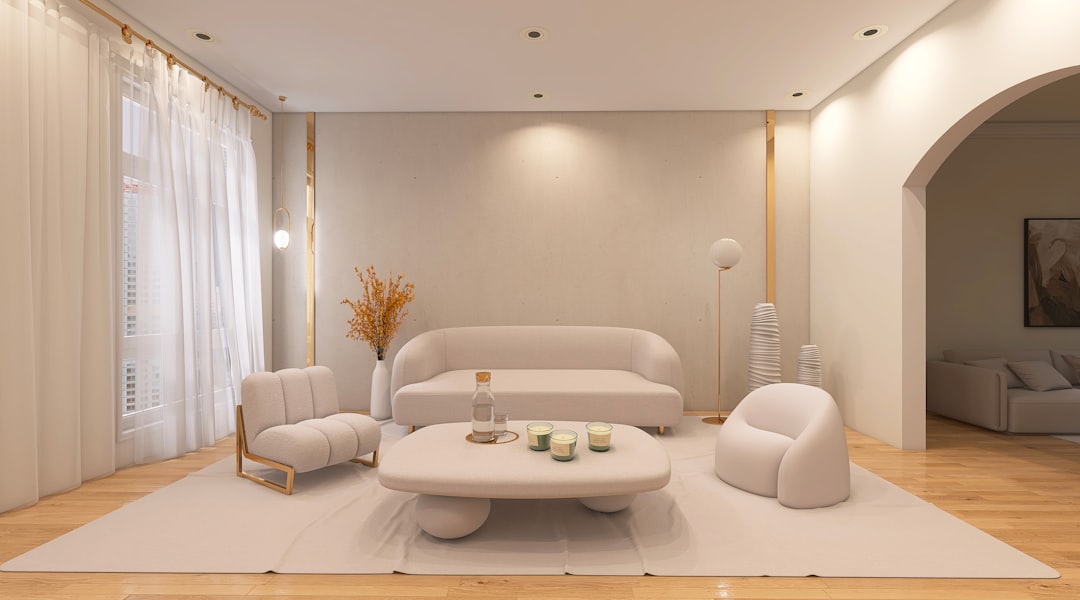
- Homepage: A clear value proposition (“We design timeless residential spaces in your area”) and stunning hero images of your best work.
- About Page: Tell your firm’s story, introduce your principal architects and team, and explain your design philosophy.
- Portfolio/Projects Page: This should feature detailed case studies, not just a gallery of images.
- Services Pages: Create dedicated pages for each core service you offer (e.g., Residential Design, Commercial Fit-Outs, Historic Restoration).
- Contact Page: Include your full NAP, an embedded Google Map, and a simple contact form.
Integrating Local Keywords Naturally
To signal your local relevance to Google, you must weave location-specific keywords into your website’s fabric.
- Title Tags and Headers: The title tag of your homepage should be something like “Award-Winning Interior Architecture.” Use similar phrasing in the H1 and H2 headers on your key service pages.
- Body Content: Mention your service area, specific neighborhoods, or local landmarks within your project descriptions and service details. For example, “For this Victorian home renovation in the [Neighborhood Name] district…”
- Image Alt-Text: Describe your project photos with location-based keywords for both SEO and accessibility. An alt-text could be: “Modern living room design for a waterfront home.”
Showcasing Your Expertise Through Project Case Studies
Your portfolio should do more than just display photos; it should tell a story. Structure each project page as a narrative to demonstrate your problem-solving skills and the value you create.
- The Story Arc: Frame each case study with a clear beginning, middle, and end: The Client’s Problem -> Your Process & Solution -> The Stunning Result.
- Include Testimonials: Embed a direct quote from the client for that specific project. This adds immense credibility.
- Use High-Resolution Imagery: Your work is visual. Invest in professional photography to capture the detail, lighting, and feel of the spaces you create. It is one of the best marketing investments you can make.
Content Creation Establishes Your Firm as the Go-To Local Expert
Consistently publishing valuable content that answers the questions of your local audience is how you build topical authority and attract clients who are in the early stages of their decision-making process. This strategy positions your firm not just as an option, but as the only logical choice.
Blogging About Local Trends and Projects
Your blog is the perfect platform to showcase your deep understanding of the local market. This is where you can truly connect physical business activity to your digital presence, a cornerstone of event-driven SEO.
- Topic Ideas: Consider articles like “Navigating your area’s Complex Building Permit Process,” “The Top 5 Architectural Styles in the your area Area,” or “A Guide to Sourcing Materials from Local Artisans in your area.”
- Highlighting Your Work: Turn every completed project into a detailed blog post. Discuss the challenges, the materials used, and why certain design decisions were made for that specific local context.
Creating Location-Specific Service Pages
To capture highly motivated searchers, get granular with your service pages. Instead of having a single “Residential Design” page, create dedicated pages for your most valuable sub-services and locations.
- Hyper-Local Targeting: Build out pages like “Luxury Apartment Renovation in [Downtown Neighborhood]” or “Historic Brownstone Restoration in [Historic District].”
- Why This Works: These pages perfectly match the “long-tail” search queries used by potential clients who know exactly what they want. The user who lands on that page immediately feels understood, dramatically increasing the chance they will contact you.
Using Video Tours and “Before & After” Content
Dynamic visual content is incredibly engaging and effective at demonstrating your impact.
- Video Walkthroughs: A short, professionally shot video tour of a completed project can convey the flow and feel of a space in a way static photos cannot.
- Demonstrate Transformation: “Before & After” photo sliders or galleries provide a powerful, at-a-glance look at the value you create. This visual storytelling is compelling and easily shareable on social media.
Building Local Authority Through Citations and Backlinks Cements Your Ranking
Google assesses your local prominence not just by what you say about yourself, but by what other reputable online entities in your area say about you. Building a strong profile of local mentions is a powerful signal of your legitimacy and importance within the community, cementing your position in search results.
What Are Local Citations and Why Do They Matter?
A citation is any online mention of your business’s Name, Address, and Phone number (NAP). The consistency of this information across the web is a crucial trust signal for search engines.
- NAP Consistency: Inconsistent information (e.g., “St.” on one site and “Street” on another) can confuse search engines and hurt your rankings. Perform an audit to ensure your NAP is identical everywhere it appears.
- Key Directories: Ensure your firm is listed on essential directories for the design and construction industry, such as Houzz, as well as general local directories like Yelp and the local Chamber of Commerce.
Getting Featured in Local Publications and Design Blogs
A mention or link from a respected local website is a high-value endorsement.
- Digital PR: Actively reach out to local lifestyle magazines, real estate blogs, and news outlets. Pitch them stories about your most interesting projects, especially those with a unique local angle. A link from their site to yours is a powerful “backlink” that transfers authority.
Partnering with Local Builders, Realtors, and Suppliers
Strengthen your online presence by formalizing your real-world professional relationships.
- Symbiotic Relationships: Offer to feature trusted local builders, real estate agents, or material suppliers on a “Partners” page on your website, and ask them to do the same for you. These reciprocal links demonstrate to Google that you are an integrated and respected member of the local professional community.
icmimarlar.org Connects Expertise with Opportunity in the Turkish Interior Architecture Industry
Building a powerful digital showroom is a universal strategy, but its success is amplified when connected to a strong professional network. As the premier platform for interior architects, icmimarlar.org provides the tools and community to help you translate your local search dominance into tangible business growth. Our platform is structured to help you get discovered, featuring extensive sitemaps of professional posts and pages that enhance visibility.
How Our Platform Amplifies Your Digital Efforts
- Professional Profile: A detailed profile on a respected industry platform like icmimarlar.org acts as a powerful, high-authority citation and backlink to your own website. Our directory of users is a go-to resource for clients seeking talent.
- Showcasing Your Work: Feature your best projects in our curated galleries, which are organized by category and tags. This allows you to gain visibility from a wider, yet highly relevant, audience actively seeking design inspiration and professional services.
Leveraging a Professional Network for Growth
- Collaboration Opportunities: Connect with other architects, designers, and builders on the platform to partner on larger projects or refer work that falls outside your specialization.
- Staying Ahead of Trends: Access resources, articles, and insights from industry leaders to keep your practice—and your marketing—on the cutting edge.
Your Blueprint for Local Success
Building your digital showroom is not a one-time setup; it is an ongoing process of refining your online presence to accurately reflect the quality and expertise of your physical work. By methodically focusing on the core pillars—a flawless Google Business Profile, a locally-optimized website, expert-driven content, and local authority building—you create a predictable and scalable system for attracting your ideal local clients.
Don’t feel overwhelmed. Start with one area this week, such as claiming and completely optimizing your Google Business Profile. From there, move on to improving a single project case study on your website. Each small step builds upon the last, creating a powerful digital engine that works for you around the clock. Your next big project is searching for you online right now; this blueprint will ensure they can find you.